


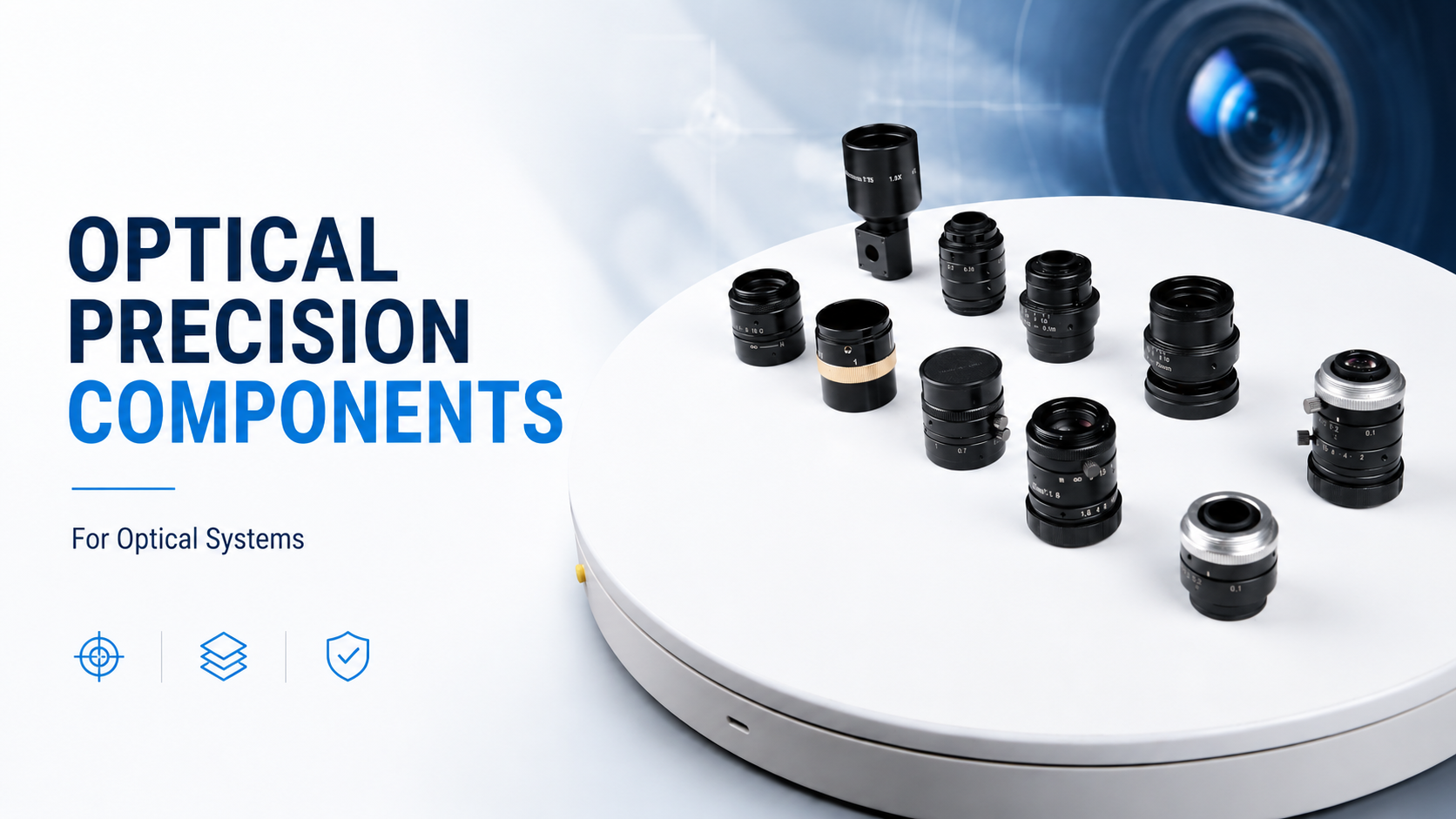
In optical systems, mechanical parts are not just supporting structures. They directly affect how lenses, sensors, mirrors, laser modules, and other optical elements are positioned, aligned, and protected. A small machining error in a housing, lens barrel, or mounting surface can lead to optical axis deviation, unstable assembly, image distortion, or reduced system performance.
This is why optical precision machined components require more than standard CNC machining. These parts must combine tight dimensional control, stable materials, clean surfaces, reliable finishing, and accurate inspection. For industries such as medical imaging, laser equipment, semiconductor inspection, industrial vision, aerospace optics, and optical instruments, precision machined components play a critical role in overall product reliability.
XY-GLOBAL provides custom optical CNC machining services for customers who need high-accuracy mechanical components for optical and imaging systems.
What Are Optical Precision Machined Components?
Optical precision machined components are high-accuracy mechanical parts used in optical devices and optical assemblies. They are not usually the optical lenses or glass elements themselves. Instead, they are the precision structures that hold, align, support, protect, and connect optical elements inside a complete system.
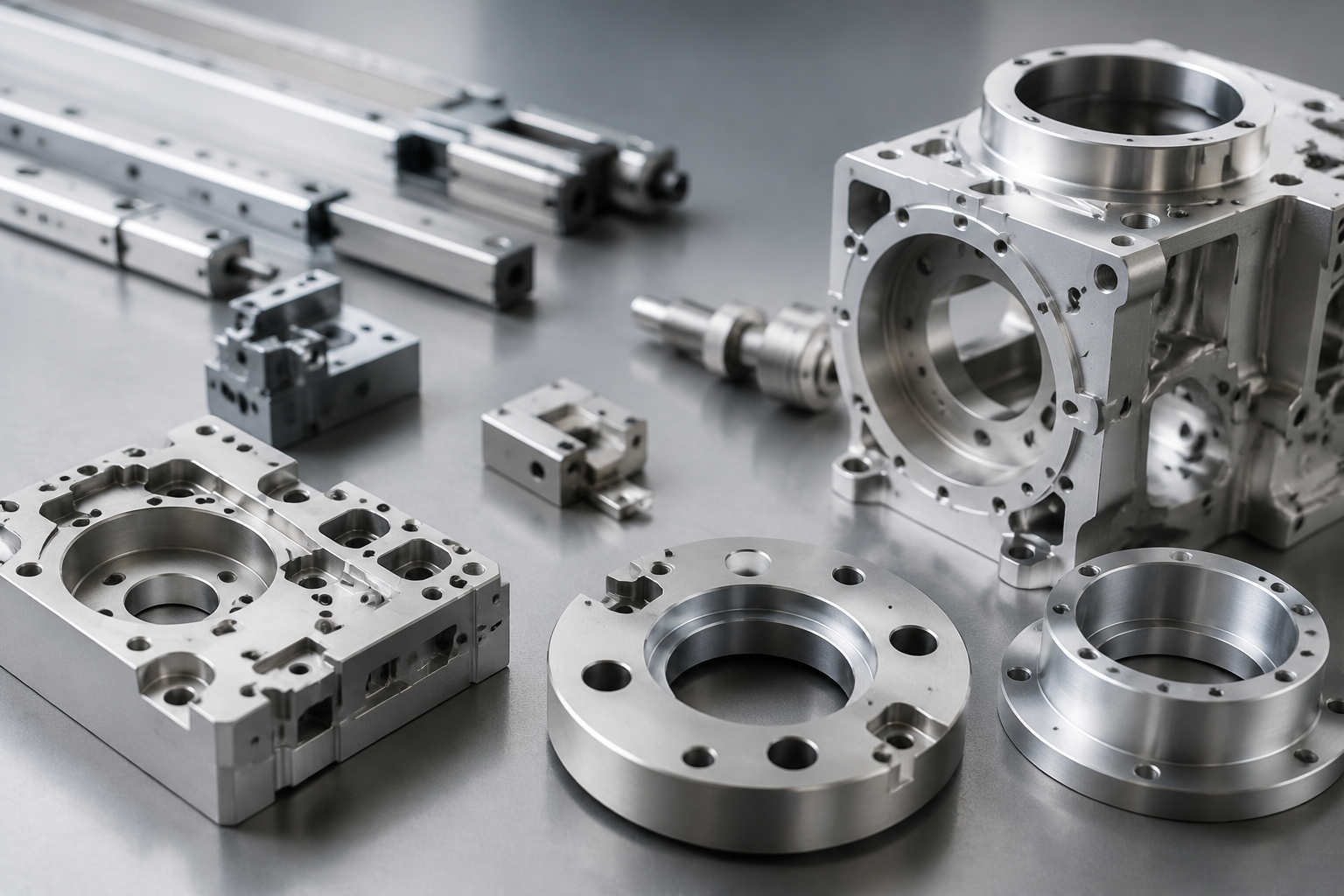
Common examples include optical housings, lens barrels, lens mounts, mirror mounts, sensor housings, laser module housings, brackets, spacers, alignment parts, and structural frames. These components help maintain the correct position and angle of lenses, sensors, mirrors, filters, prisms, and laser sources.
For example, a lens barrel must hold the lens group in the correct axial position. A sensor housing must keep the image sensor stable relative to the optical path. A mirror mount must maintain the required angle during operation. In each case, the mechanical component becomes part of the optical performance, not just a simple machined part.
This makes custom optical machined components different from ordinary CNC parts. They must consider not only size and shape, but also optical alignment, surface condition, burr control, finishing, cleaning, thermal behavior, and long-term assembly stability.

Why Precision Matters in Optical Components
Precision is especially important in optical applications because the mechanical structure often defines the position of the optical path. If the machining accuracy is not controlled, the final system may still assemble correctly, but its optical performance can be affected.
One important factor is optical axis stability. Lens barrels, mounting holes, internal bores, and reference surfaces must be machined with good concentricity and alignment. If the lens axis shifts from the intended design, the system may experience focus errors, uneven imaging, or reduced measurement accuracy.
Flatness and perpendicularity are also critical. Many optical components rely on accurate datum surfaces during assembly. If a mounting surface is not flat or perpendicular to the optical path, the lens, sensor, or mirror may be slightly tilted. In high-accuracy imaging, laser alignment, or inspection systems, even a small angular error can affect performance.
Assembly stability is another key point. Optical parts often need to maintain their position after repeated use, vibration, temperature changes, or transportation. This means the machined component should not only meet the drawing dimensions, but also support stable mechanical contact, controlled fastening, and reliable positioning during real operation.
For this reason, optical CNC machining should be evaluated from both a machining perspective and an assembly perspective. A good optical machined component is not only accurate on the inspection report. It must also support stable optical performance after assembly.
Common Types of Optical Machined Components
Optical precision machining covers many different component types. Each part has its own function in the optical system, and each one may require different machining priorities.
| Component Type | Typical Function |
|---|---|
| Optical housings | Protect and position lenses, sensors, electronics, and internal optical structures |
| Lens barrels | Hold lens groups and control axial alignment, inner bore accuracy, and thread precision |
| Lens mounts | Support individual lenses or lens assemblies with stable positioning |
| Mirror mounts | Maintain mirror angle and position in laser or optical path systems |
| Sensor housings | Hold image sensors, detector modules, or camera-related parts |
| Laser module housings | Support laser diodes, heat dissipation structures, and beam alignment features |
| Optical brackets and frames | Provide mechanical support for optical instruments and inspection systems |
Among these parts, precision lens barrels are often one of the most demanding categories. They may require accurate inner diameters, fine threads, concentricity control, smooth internal surfaces, and black anodized finishing to reduce reflection. Optical housings and sensor housings may focus more on datum accuracy, assembly interfaces, surface quality, and dimensional stability.
For customers developing medical imaging devices, industrial cameras, laser modules, or optical inspection equipment, choosing the right machining approach for each component type is essential.
Materials Used for Optical Precision Machining
Material selection has a direct impact on machining stability, surface finish, weight, strength, thermal behavior, and finishing quality. In optical CNC machining, the material is usually selected based on the function of the part and the working environment of the optical system.
Aluminum 6061 and 7075 are widely used for optical housings, lens barrels, brackets, and lightweight structural parts. Aluminum offers good machinability, stable anodizing performance, and a favorable strength-to-weight ratio. Black anodized aluminum is common in optical systems because it can help reduce unwanted reflection inside the component.
Stainless steel is often used when higher strength, wear resistance, or dimensional stability is required. It is suitable for small precision parts, support structures, adjustment components, and optical instrument parts that need stronger mechanical performance.
Titanium may be selected for high-end medical optical devices, aerospace optical systems, or lightweight applications that need strength, corrosion resistance, and stable performance. However, titanium machining requires careful process control because of its material characteristics.
Brass and copper are used in certain optical and laser-related components where thermal conductivity, electrical conductivity, or special mechanical properties are needed. Copper can be useful for heat dissipation parts in laser modules, while brass may be selected for small precision fittings or threaded components.
PEEK and other engineering plastics can be used when electrical insulation, weight reduction, chemical resistance, or non-metallic properties are required. These materials are often seen in special optical instruments, medical devices, and precision assemblies.
A professional optical machining supplier should not simply machine the material shown on the drawing. They should also understand how material selection affects tolerance control, surface finish, finishing process, assembly, and long-term stability.
Key Machining Requirements for Optical Components
Optical components usually have stricter requirements than general industrial CNC parts. The most obvious requirement is tight tolerance machining, but that is only one part of the full picture.
For many optical machined components, features such as inner bores, threaded areas, mounting surfaces, alignment holes, and datum faces must be carefully controlled. These features may determine how a lens, sensor, mirror, or laser module is positioned in the final assembly.
Surface finish is also important. Rough or inconsistent surfaces can affect assembly, appearance, sealing, coating performance, or optical cleanliness. For internal optical structures, surface treatment may also influence stray light. Matte black surfaces, black anodizing, bead blasting, or other non-reflective finishes may be required depending on the design.
Burr control is another critical requirement. A small burr may seem minor in general machining, but in optical devices it can cause assembly interference, particle contamination, scratching, or alignment problems. Clean edges and controlled deburring are especially important for lens mounts, sensor housings, optical brackets, and internal optical structures.
Finishing also needs to be considered during the machining stage. For example, anodizing or coating can change dimensions slightly. If the tolerance is tight, the supplier should consider finishing thickness, masking areas, thread protection, and contact surfaces before production. This is why DFM review is valuable for optical CNC machining.
A reliable supplier should evaluate machining, finishing, cleaning, inspection, and assembly risks together, rather than treating each step separately.

XY-GLOBAL Optical Precision Machining Capabilities
XY-GLOBAL provides custom CNC machining services for optical precision machined components, including optical housings, lens barrels, lens mounts, mirror mounts, sensor housings, laser module housings, and other high-accuracy mechanical parts used in optical systems.
Our machining support covers CNC milling, CNC turning, 5-axis machining, precision drilling, threading, deburring, surface finishing, and dimensional inspection. For optical projects, we pay attention to critical features such as datum surfaces, mounting holes, inner bores, thread accuracy, flatness, concentricity, surface finish, and edge quality.
We also support DFM review before production. This helps customers identify potential risks related to tolerance design, machining feasibility, surface treatment, assembly, and inspection. For optical components, early DFM feedback can reduce the risk of rework, alignment issues, finishing problems, or delayed assembly.
Surface finishing options may include anodizing, black anodizing, bead blasting, polishing, passivation, and other treatments depending on the material and application. For optical parts that require reduced reflection or clean appearance, finishing control should be considered together with machining dimensions.
XY-GLOBAL can also provide inspection support such as dimensional inspection reports, surface roughness checks, and First Article Inspection documentation according to project requirements. From prototype development to small-batch or production machining, our goal is to help customers receive stable, accurate, and assembly-ready optical machined components.
Conclusion
Optical precision machined components are essential for high-accuracy optical systems. They may look like mechanical parts, but they directly influence optical alignment, assembly stability, surface quality, and long-term performance.
From optical housings and precision lens barrels to mirror mounts, sensor housings, and laser module parts, each component must be manufactured with careful attention to tolerances, materials, surface finish, burr control, finishing, and inspection.
For companies developing imaging devices, laser systems, medical optical equipment, semiconductor inspection tools, aerospace optics, or industrial vision products, working with an experienced optical CNC machining supplier can help reduce manufacturing risk and improve product reliability.
XY-GLOBAL supports custom optical precision machining with DFM review, CNC machining, surface finishing, and quality inspection for demanding optical applications.
FAQ
Why is CNC machining important for optical components?
CNC machining is important because optical components often require tight tolerances, accurate datum surfaces, stable mounting features, precise bores, clean edges, and controlled surface finish. These features help maintain lens alignment, sensor position, mirror angle, and optical axis stability in the final assembly.
What surface finishes are used for optical precision machined components?
Common surface finishes include black anodizing, matte black anodizing, bead blasting, polishing, passivation, and other coating or finishing processes. For many optical applications, black or matte surfaces are used to reduce unwanted reflection and help control stray light inside the optical system.
Can optical precision machined components be customized?
Yes. Optical precision machined components are usually customized based on the customer’s drawings, 3D models, materials, tolerances, surface finish requirements, and assembly conditions. Customization is common for optical housings, lens barrels, lens mounts, sensor housings, laser module parts, and optical instrument components.
What industries use optical precision machined components?
Optical precision machined components are used in medical imaging devices, laser systems, industrial cameras, machine vision equipment, semiconductor inspection systems, aerospace optical systems, laboratory instruments, microscopes, spectrometers, and other optical or imaging equipment.
How should I choose a supplier for optical CNC machining?
A suitable optical CNC machining supplier should have experience with tight tolerance machining, DFM review, surface finish control, burr removal, finishing process coordination, and dimensional inspection. For optical projects, it is also important that the supplier understands how machining accuracy, coating thickness, material selection, and assembly features can affect the final optical system.


Share:
Medical Device Machining Process: Precision That Saves Lives
High Precision Machining Services for Custom CNC Parts