


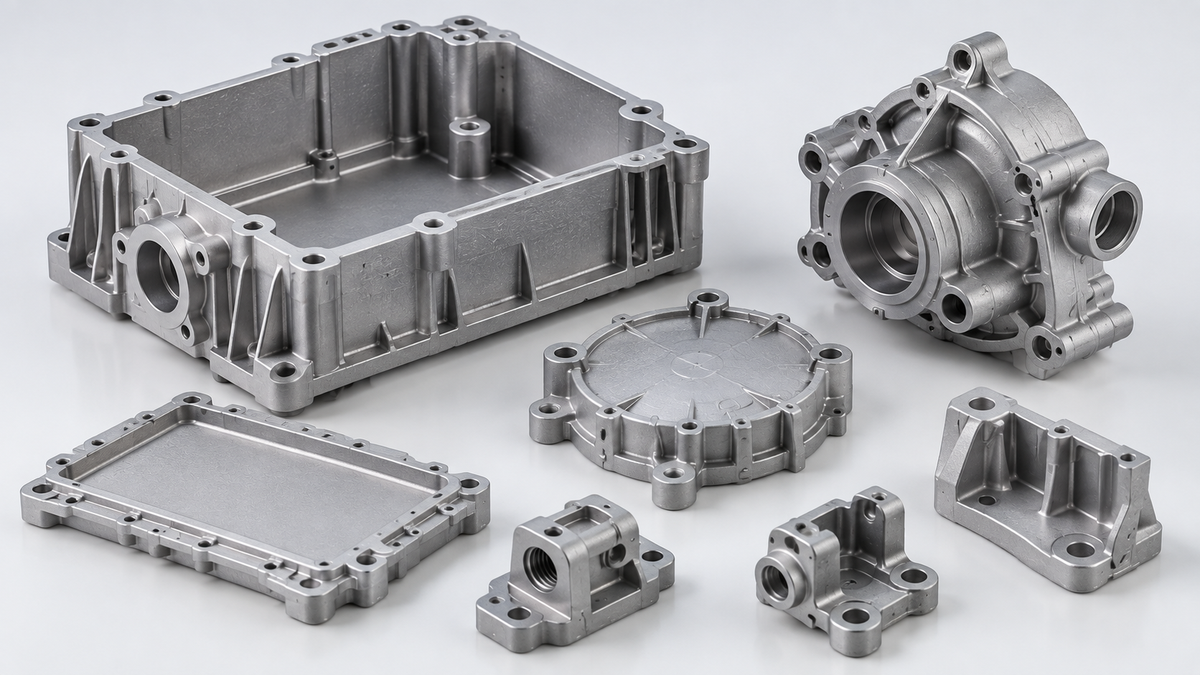
Die casting of metals is a manufacturing process used to produce metal parts by injecting molten metal into a precision steel mold under high pressure.
For buyers, the main value of die casting is not simply that it can make metal parts quickly.
Its real advantage is that it can produce complex, repeatable metal components at a competitive unit cost, especially when production volume increases.
This makes die casting a practical choice for:
-
Housings
-
Covers
-
Brackets
-
Motor components
-
Electronic enclosures
-
Automotive parts
-
Robot components
-
Industrial equipment parts
-
Heat dissipation components
At XY Global, we manufacture custom die cast parts mainly according to customer drawings and application requirements.

What Metals Are Commonly Used for Die Casting?
The most common materials include:
Aluminum Die Casting
Aluminum is widely used because it offers a good combination of:
-
Low weight
-
Good strength
-
Corrosion resistance
-
Thermal conductivity
-
Machinability
-
Surface finishing options
It is commonly used for automotive, robotics, electronics, industrial equipment, and mechanical housings.
Zinc Die Casting
Zinc is suitable for smaller and more detailed components.
It offers:
-
Excellent dimensional repeatability
-
Thin-wall capability
-
Good surface quality
-
Good casting flow
Magnesium Die Casting
Magnesium is especially useful when weight reduction is important.
It is often considered for lightweight structural components and electronic housings.

Why Customers Choose Die Casting
Compared with CNC machining a complete part from solid material, die casting can significantly reduce material waste and machining time once the mold is developed.
A typical die cast component may already include:
-
Ribs
-
Bosses
-
Holes
-
Mounting features
-
Complex external geometry
-
Thin walls
Only critical areas may require secondary CNC machining.
This is one of the main reasons die casting becomes attractive for medium- and high-volume production.
However, the project needs to be designed correctly from the beginning.
A low mold price does not help if the part later has porosity, deformation, poor filling, or excessive machining allowance.
A Typical Die Casting Project
One common type of project we receive is an aluminum housing that was originally produced mainly by CNC machining.
The customer needed:
-
Lower unit cost
-
Better production efficiency
-
Consistent appearance
-
Several threaded and precision mounting features
Instead of machining the complete housing from a large aluminum block, the part was redesigned around a die casting process.
The casting produced most of the final geometry, including the external shape, ribs, and internal cavities.
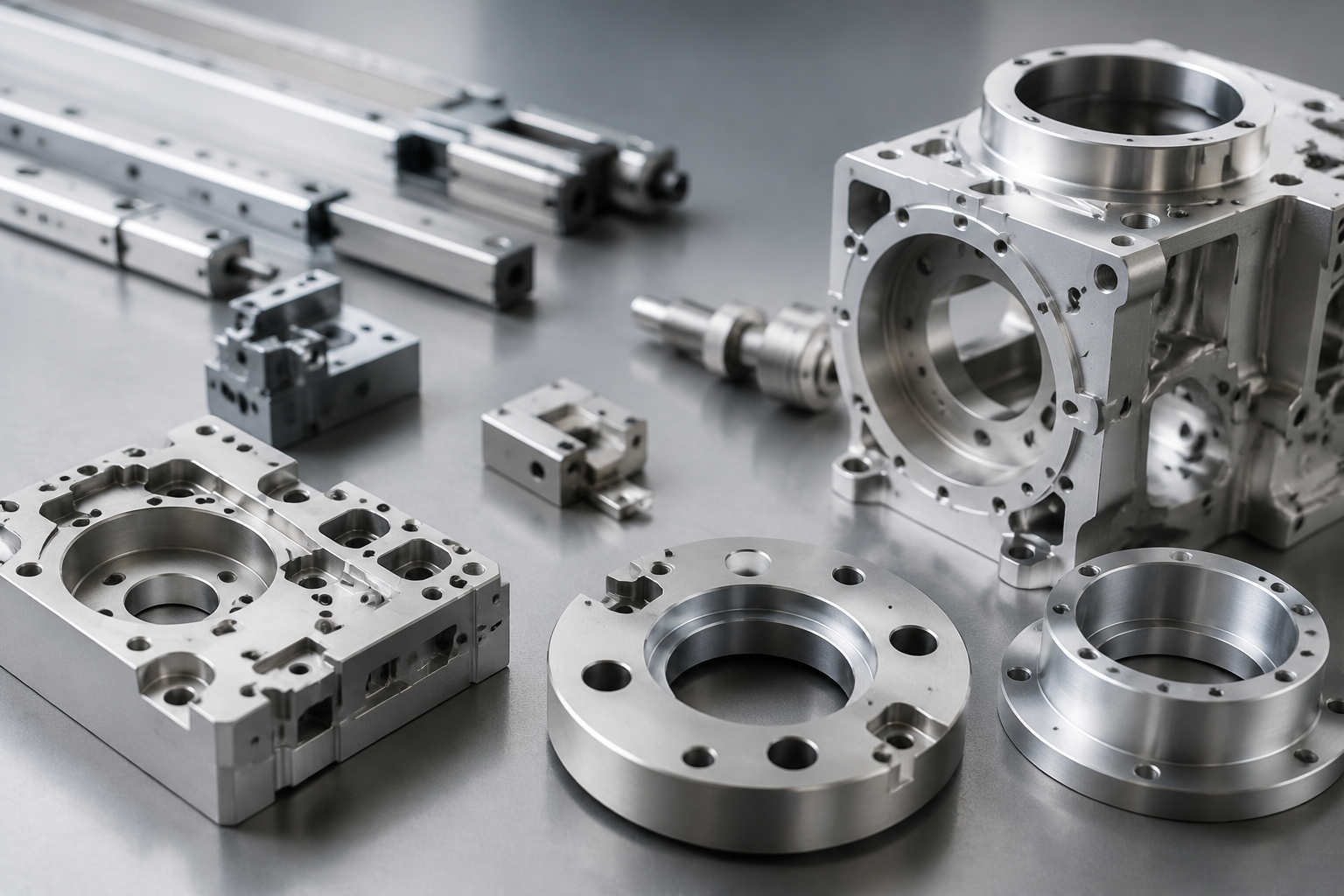
CNC machining was then used only for the critical features, such as:
-
Precision mounting surfaces
-
Holes
-
Threads
-
Datum locations
This type of process combination can reduce both material waste and total machining time.
More importantly, it creates a production method that is easier to scale when annual demand increases.
Die Casting Is Not Only About the Mold
A successful die casting project depends on much more than making a tool.
Before production, several points should be reviewed:
-
Wall thickness
-
Draft angle
-
Rib design
-
Gate location
-
Ejection position
-
Shrinkage
-
Machining allowance
-
Flatness requirements
-
Critical tolerances
-
Surface treatment
For example, if one mounting surface needs high flatness, it may be better to leave machining allowance and finish that area by CNC after casting.
Trying to achieve every precision feature directly from the casting usually increases risk unnecessarily.
The best solution is often:
Die casting for the main shape + CNC machining for critical features.

From Prototype to Production
At XY Global, we support die casting projects from early manufacturing review through production.
Our capabilities include:
-
Aluminum die casting
-
Zinc die casting
-
Magnesium die casting
-
CNC secondary machining
-
Drilling and tapping
-
Surface finishing
-
Powder coating
-
Anodizing where applicable
-
Plating
-
CMM inspection
-
Assembly
We also support DFM review before tooling starts.
This allows potential problems to be identified before the mold is manufactured.
When Should You Consider Die Casting?
Die casting is worth considering when your project has:
-
Repeated production demand
-
Complex metal geometry
-
Multiple ribs or bosses
-
Thin-wall structures
-
High CNC material waste
-
Increasing annual quantity
-
Cost reduction requirements
For very low quantities, CNC machining may still be the better option.
But once the quantity increases, die casting can often provide a much more efficient production route.
Looking for a Custom Die Casting Supplier?
If you are developing a new aluminum, zinc, or magnesium component, you do not need to decide the complete manufacturing process before contacting us.
Send us:
-
2D drawing
-
3D model
-
Material
-
Quantity
-
Surface finish
-
Application
Our engineering team can review whether the part is suitable for die casting and which areas should remain CNC machined.
XY Global supports custom metal manufacturing from prototype development to volume production, with ISO 9001 and ISO 13485 quality management systems.
If you are looking for a supplier for custom die cast parts, send us your drawing and target quantity. We can review the design and provide a manufacturing proposal and quotation.


Aktie:
What is Optical Lens?