


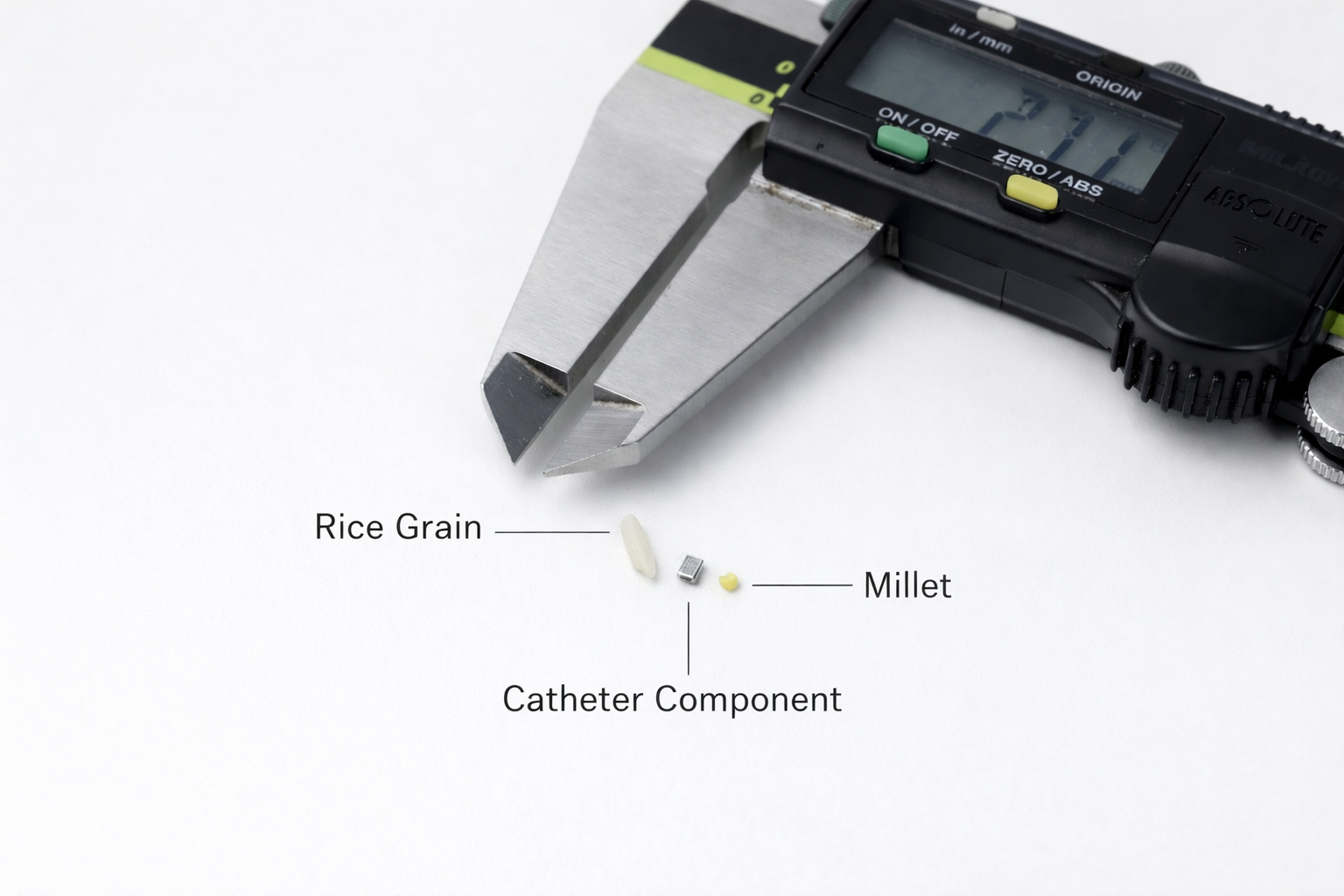
Miniatur-Katheterkomponenten
Warum CNC für medizinische Teile wichtig ist
In der medizinischen Entwicklung sind Designänderungen üblich.
Ein Teil mag in CAD einfach aussehen, wird aber schwierig, wenn die eigentliche Bearbeitung und Inspektion beginnt.
Die CNC-Fertigung von Medizinteilen hilft dabei, indem sie Folgendes bietet:
- schnelle Prototypen-Iteration
- hohe Präzision für kleine Merkmale
- bessere Unterstützung für DFM-Überprüfung
- einfacherer Übergang von der Muster- zur Validierungsproduktion
Für viele medizinische Projekte ist CNC nicht nur eine Bearbeitungsmethode.
Es ist ein Entwicklungshilfsprozess.

Wichtige Anforderungen für medizinische Miniaturteile
Miniatur-Katheterteile erfordern in der Regel mehr als die standardmäßige Bearbeitungskontrolle.
| Schwerpunkt | Warum es wichtig ist |
|---|---|
| Kleine Größe | Das Teil muss in den begrenzten Platz des medizinischen Geräts passen |
| Präzision | Kleine Merkmale erfordern dennoch eine genaue Maßkontrolle |
| Saubere Kanten | Grata oder raue Kanten können die Montage oder Funktion beeinträchtigen |
| Stabile Oberfläche | Die Oberflächenqualität ist wichtig für Handhabung und Konsistenz |
| Wiederholbarkeit | Gute Muster sind nicht genug; spätere Chargen müssen übereinstimmen |
Hier wird die CNC-Fertigung von Medizinteilen besonders wertvoll.
Ein gutes medizinisches Teil muss klein und präzise sein
Für katheterbezogene Komponenten ist „klein“ nur der Ausgangspunkt.
Die eigentliche Anforderung ist klein und präzise.
Ein Miniaturteil kann Folgendes umfassen:
- feine äußere Geometrie
- schmale Merkmale
- enge Maßanforderungen
- empfindliche Kantenbedingungen
- innere Hohlstrukturen
Diese Details machen die Bearbeitung und Inspektion anspruchsvoller.

Produktmerkmale, die in dieser Komponente gezeigt werden
Ihre drei Produktbilder können den Artikel sehr natürlich unterstützen.
1. Reiskorn-Vergleich
Dieses Bild zeigt, wie miniaturisiert das Teil wirklich ist.
Es hilft Kunden zu verstehen, dass die Komponente für extrem begrenzte Platzverhältnisse konzipiert ist.
Hauptbotschaft:
Das Teil ist nicht nur äußerlich klein. Es ist für den hochpräzisen medizinischen Einsatz in einer kompakten Struktur gebaut.
2. Messschiebermessung
Dieses Bild zeigt die tatsächlich gemessene Größe der Komponente.
Es erhöht die Glaubwürdigkeit und hilft, den Maßstab klarer zu erklären.
Hauptbotschaft:
Bei der CNC-Fertigung von Medizinteilen muss die Miniaturgröße mit messbarer Maßkontrolle übereinstimmen.
3. Hohle Innenstruktur
Dieses Bild zeigt, dass das Teil nicht massiv, sondern innen hohl ist.
Das erhöht die Bearbeitungsherausforderung erheblich.
Hauptbotschaft:
Ein miniaturisiertes hohles medizinisches Teil erfordert eine strengere Prozesskontrolle, eine sorgfältigere Inspektion und ein besseres Konsistenzmanagement.

Warum hohle Miniaturteile schwieriger sind
Eine hohle medizinische Komponente ist schwieriger zu bearbeiten als eine einfache äußere Form.
| Merkmal | Fertigungsherausforderung |
|---|---|
| Kleine Gesamtgröße | Schwerer zu halten und zu inspizieren |
| Hohle Innenstruktur | Schwieriger zu bearbeiten und zu verifizieren |
| Feine Kanten | Höhere Anforderungen an die Gratkontrolle |
| Enge Toleranzen | Weniger Spielraum für Prozessschwankungen |
| Medizinische Anwendung | Höhere Erwartungen an die Konsistenz |
Aus diesem Grund erfordert die CNC-Fertigung von Medizinteilen für katheterbezogene Teile eine sorgfältige Prozessplanung von Anfang an.
Warum DFM wichtig ist
Viele Bearbeitungsprobleme beginnen nicht in der Produktion.
Sie beginnen im Design.
Deshalb ist DFM bei medizinischen Projekten wichtig.
Es hilft zu erkennen, ob ein Merkmal zu dünn, zu tief, zu scharf oder zu schwer zu inspizieren ist, bevor Probleme größer werden.
Eine praktische DFM-Überprüfung kann sich konzentrieren auf:
- Zugänglichkeit von Merkmalen
- Wandstärke
- Kantenbeschaffenheit
- Bezugsstrategie
- Toleranzniveau
- Machbarkeit der internen Geometrie
Für medizinische Miniaturkomponenten kann eine frühe DFM-Unterstützung Zeit in späteren EVT-, DVT- und PVT-Phasen sparen.
Was CNC vom Prototyp bis zur Produktion unterstützen kann
Medizinische Projekte verlaufen in der Regel Schritt für Schritt.
| Phase | Hauptziel | CNC-Unterstützung |
|---|---|---|
| Prototyp | Konzept überprüfen | Schnelle Musterbearbeitung und Design-Feedback |
| EVT | Technische Machbarkeit bestätigen | Strukturüberprüfung und Herstellbarkeitsunterstützung |
| DVT | Konsistenz verbessern | Bessere Prozesskontrolle und Inspektionsabstimmung |
| PVT | Pilotfertigung vorbereiten | Stabile Bearbeitungsroute und Wiederholbarkeit |
| Produktion | Lieferkonsistenz aufrechterhalten | Kontinuierliche Qualitäts- und Fertigungskontrolle |
Deshalb ist die CNC-Fertigung von Medizinteilen während des gesamten Entwicklungsprozesses nützlich, nicht nur in der Prototypenphase.
Geeignete Anwendungen
Diese Art der Fertigung eignet sich besonders für:
- miniaturisierte katheterbezogene Komponenten
- Präzisions-Medizingeräteteile
- Prototypen medizinischer Baugruppen
- Kleinserien-Validierungsfertigungen
- Metallteile mit engen Toleranzanforderungen
- medizinische Komponenten mit hohlen Innenmerkmalen
Wonach Kunden in der Regel suchen
Wenn Kunden einen Lieferanten für die CNC-Fertigung von Medizinteilen bewerten, geht es ihnen oft um mehr als nur den Preis.
Sie möchten auch wissen:
- Kann der Lieferant sehr kleine Teile präzise bearbeiten?
- Kann der Lieferant Grate und Kanten kontrollieren?
- Kann der Lieferant hohle Innenmerkmale bearbeiten?
- Kann der Lieferant DFM und die Überprüfung von Zeichnungen unterstützen?
- Kann der Lieferant vom Prototyp bis zu späteren Fertigungen übergehen?
Diese Punkte sind bei miniaturisierten Katheterprodukten noch wichtiger.
Fazit
Bei medizinischen Miniaturteilen geht es nicht nur um kleine Abmessungen.
Es geht um Präzision, Sauberkeit, interne Kontrolle und Wiederholbarkeit.
Für katheterbezogene Komponenten hilft die CNC-Fertigung von Medizinteilen dabei, komplexe Miniaturdesigns in reale, überprüfbare Teile umzusetzen. Sie unterstützt die frühe Entwicklung, reduziert das Fertigungsrisiko und bereitet das Projekt auf spätere Produktionsphasen vor.
Wenn Sie an unserem medizinischen CNC-Bearbeitungsservice interessiert sind, besuchen Sie gerne unsere Seite Medizinische Industrie
Wenn Sie ein Projekt haben, können Sie uns auch gerne Ihre 2D- oder 3D-Zeichnungen zusenden.


Aktie:
8 Schlüssel zur CNC-Bearbeitung von Keramik
Preis für Aluminiumdruckguss: Was bestimmt die Kosten und wie man sie schätzt