


Nicht jedes optische Projekt kann auf Standardteile zurückgreifen. Wenn das Design eine einzigartige Gehäusestruktur, begrenzten Bauraum oder kritische Ausrichtungsanforderungen umfasst, werden kundenspezifische CNC-Optikkomponenten notwendig.
In den meisten Fällen sind diese Teile nicht die Linsen selbst, sondern die präzisionsgefertigten mechanischen Komponenten, die das optische System unterstützen.
Wie Linsengehäuse, Fassungen, Sicherungsringe, Halterungen, Grundplatten und Ausrichtungsmerkmale beeinflussen sie alle, ob die Endmontage stabil, präzise und wiederholbar ist.
Für Einkäufer geht es bei der Beschaffung kundenspezifischer CNC-Optikkomponenten nicht nur darum, einen CNC-Lieferanten zu finden. Die eigentliche Frage ist, ob der Lieferant Teile so bearbeiten kann, dass optische Montage, Maßhaltigkeit und langfristige Produktzuverlässigkeit gewährleistet sind.
Was Käufer über kundenspezifische CNC-Optikkomponenten wissen müssen
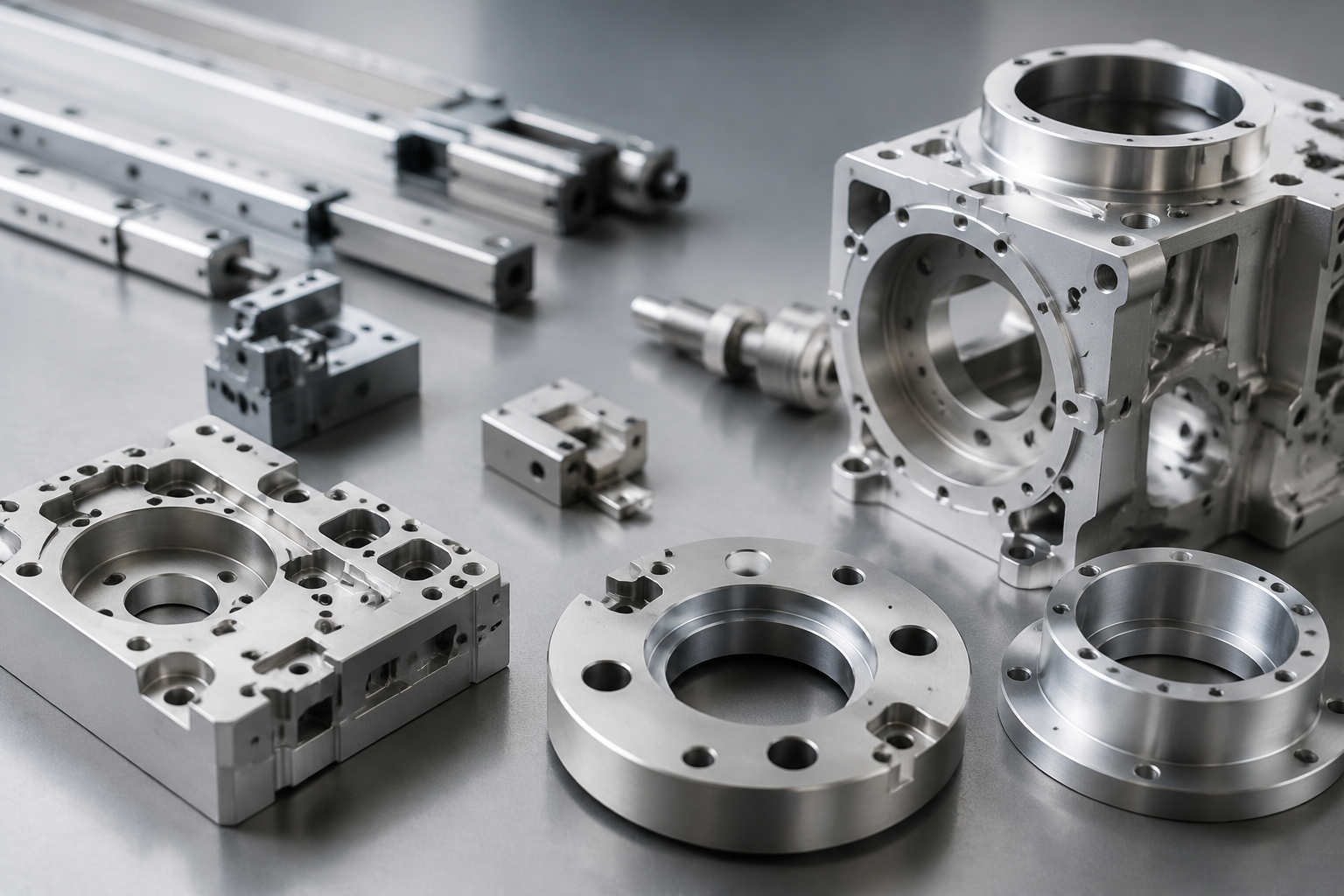
Kundenspezifische CNC-Optikkomponenten sind maschinell gefertigte Teile, die für eine spezifische optische Anwendung hergestellt und nicht aus einem Standardkatalog ausgewählt werden.
Ihre Abmessungen, Montageflächen, internen Merkmale und Toleranzanforderungen werden in der Regel durch das Produktdesign selbst definiert.
In optischen Geräten kann selbst ein einfach aussehendes mechanisches Teil die Ausrichtung, Passung oder Systemstabilität direkt beeinflussen. Ein Gehäuse kann eine strenge Koaxialitätskontrolle erfordern.
Eine Halterung kann eine präzise Ebenheit erfordern. Ein interner Hohlraum kann eine Oberfläche benötigen, die für die Lichtkontrolle oder eine saubere Montage geeignet ist.
Deshalb ist die kundenspezifische Bearbeitung oft die praktische Lösung, sobald das Design über die frühe Konzeptvalidierung hinausgeht.
In der Präzisionsfertigung bezieht sich der Begriff „CNC-Optikkomponenten“ in der Regel auf optisch-mechanische Teile und nicht auf Glasoptiken. Vom Lieferanten wird erwartet, dass er die Strukturteile herstellt, die das optische System halten, schützen, positionieren oder verbinden.

Warum Standardteile nicht immer ausreichen
Standardteile können während der frühen Evaluierung funktionieren, werden aber oft zu einer Einschränkung, sobald das optische Design in Richtung der tatsächlichen Produktentwicklung geht.
Bei optischen Baugruppen geht es selten nur um die grundlegende Passung. Wichtiger ist, ob das Teil eine genaue Positionierung, stabile Ausrichtung und wiederholbare Montage unterstützen kann.
Eine Standardkomponente mag in der Größe ähnlich erscheinen, kann aber dennoch das erforderliche Befestigungsmuster, die Wandstruktur, die interne Geometrie oder den Oberflächenzustand nicht erfüllen.
Bei präzisionsoptischen Anwendungen kann selbst eine kleine Diskrepanz Montageprobleme verursachen oder die langfristige Stabilität beeinträchtigen. Deshalb gehen viele Projekte schließlich von Standardteilen zur kundenspezifischen CNC-Bearbeitung über.
Ein weiterer häufiger Grund ist die Integration. Optische Geräte sind oft kompakt, und die mechanische Struktur muss um Sensoren, Befestigungselemente, Kabel und andere funktionale Module herum passen. In diesen Fällen erfüllen handelsübliche Teile selten alle Anforderungen gleichzeitig.
Häufig verwendete Materialien
Die Materialauswahl beeinflusst bei kundenspezifischen CNC-Optikkomponenten weit mehr als nur die Kosten. Sie wirkt sich auch auf die Bearbeitungsstabilität, das Gewicht, die Korrosionsbeständigkeit, die Oberflächengüte und das Endaussehen aus.
Aluminium (6061-T6)
Aluminium ist eines der häufigsten Materialien für kundenspezifische optische Komponenten.
Es ist leicht, effizient zu bearbeiten und wird häufig für Gehäuse, Halterungen und Strukturteile verwendet. Es eignet sich auch gut zum Eloxieren, einschließlich Schwarz-Eloxieren, das in optischen Anwendungen oft für das Aussehen und die Lichtkontrolle verwendet wird.
Für viele Projekte bietet Aluminium ein praktisches Gleichgewicht aus Präzision, Geschwindigkeit und Kosten.
Edelstahl (304 / 420)
Edelstahl wird oft verwendet, wenn höhere Festigkeit, Verschleißfestigkeit oder Korrosionsbeständigkeit erforderlich ist.
Es eignet sich für Teile, die in anspruchsvollen Umgebungen eine stärkere strukturelle Unterstützung oder eine bessere Dimensionsstabilität benötigen.
Obwohl Edelstahl in der Regel schwerer zu bearbeiten ist als Aluminium und die Produktionskosten erhöhen kann, bleibt er eine gute Wahl, wenn Steifigkeit wichtiger ist als Gewicht.
Messing (C36000)
Messing wird immer noch in bestimmten optisch-mechanischen Teilen verwendet, insbesondere für Armaturen, Gewindeteile und kleine Befestigungskomponenten.
Es lässt sich gut bearbeiten und kann stabile Maßhaltigkeitsergebnisse erzielen, was es für Präzisionsbaugruppen nützlich macht, bei denen eine saubere Bearbeitungsleistung wichtig ist.

Kritische Bearbeitungsanforderungen
Bei optisch-mechanischen Teilen geht es bei der Bearbeitungsqualität nicht nur um Maßgenauigkeit. Sie muss auch eine stabile Montage und eine zuverlässige optische Ausrichtung unterstützen.
• Toleranzen für kritische Merkmale
Nicht jede Dimension muss extrem eng sein, aber Schlüsselmerkmale müssen korrekt kontrolliert werden. Linsenmontagebereiche, Sensorschnittstellen, Gewinde und Kontaktflächen haben oft einen direkten Einfluss auf die Leistung der Endmontage.
• Konzentrizität, Ebenheit und Positionierung
Bei optischen Baugruppen können Konzentrizität und Ebenheit genauso wichtig sein wie die Größentoleranz. Wenn die Bohrung, die Montagefläche oder verwandte Merkmale nicht richtig kontrolliert werden, kann sich die optische Achse verschieben.
• Gewindequalität, Gratkontrolle und Sauberkeit
Gewinde, feine Kanten und interne Hohlräume müssen sorgfältig bearbeitet werden. Schlechte Gewinde, Grate oder Verunreinigungen können die Montagequalität und die gesamte Teilezuverlässigkeit beeinträchtigen.
Was Sie vor der Angebotsanfrage vorbereiten sollten
Um ein genaues Angebot für kundenspezifische CNC-Optikkomponenten zu erhalten, sollten Käufer die folgenden Informationen der Reihe nach vorbereiten:
Schritt 1: 2D-Zeichnungen und 3D-Dateien bereitstellen
Reichen Sie vollständige 2D-Zeichnungen zusammen mit 3D-Dateien im STEP- oder STP-Format ein. Die Zeichnung sollte Abmessungen, Toleranzen, Gewinde, kritische Oberflächen und besondere Hinweise klar darstellen.
Schritt 2: Materialanforderungen bestätigen
Geben Sie die erforderliche Materialqualität an, z. B. Aluminium, Edelstahl, Messing, Titan oder technischen Kunststoff. Falls eine Oberflächenbehandlung erforderlich ist, sollte dies ebenfalls im Voraus definiert werden.
Schritt 3: Kritische Toleranzen und Funktionsmerkmale definieren
Kennzeichnen Sie die für die Montage oder Funktion kritischen Abmessungen und Merkmale, wie Bohrungen, Montageflächen, Gewindebereiche, konzentrische Merkmale und Kontaktflächen.
Schritt 4: Anforderungen an die Oberflächengüte festlegen
Geben Sie alle Anforderungen an die Oberflächenbehandlung an, wie z. B. Eloxieren, Schwarz-Eloxieren, Passivieren, Beschichten, Glasperlstrahlen oder kosmetische Oberflächenstandards. Wenn bestimmte Bereiche unbehandelt bleiben müssen, sollte dies klar vermerkt werden.
Schritt 5: Menge und Projektphase angeben
Bestätigen Sie die benötigte Menge und ob es sich um einen Prototypenauftrag, eine Kleinserien-Probelieferung oder eine Serienproduktion handelt. Verschiedene Phasen können unterschiedliche Bearbeitungs-, Inspektions- und Kostenplanungen erfordern.
Schritt 6: Prüf- oder Montageprioritäten hervorheben
Wenn es wichtige Prüfpunkte, montagekritische Abmessungen oder Aussehensvorgaben gibt, nehmen Sie diese in das Angebotsanfragepaket auf. Dies hilft dem Lieferanten, den Auftrag von Anfang an genauer zu bewerten.

Warum Käufer XY wählen
Optische Projekte erfordern in der Regel mehr als nur Standardbearbeitungsunterstützung. Käufer benötigen einen Lieferanten, der den Zweck des Teils verstehen und Produktionsrisiken frühzeitig erkennen kann. Und was noch wichtiger ist, eine stabile Qualität dort aufrechterhält, wo es am meisten zählt.
Präzisionsbearbeitungserfahrung für optische Anwendungen
Bei XY verstehen wir, dass optisch-mechanische Komponenten nicht nur Strukturteile sind.
Viele von ihnen beeinflussen direkt die Ausrichtung, die Passgenauigkeit und die Langzeitstabilität. Deshalb konzentrieren wir uns nicht nur auf die Abmessungen, sondern auch auf die Merkmalsbeziehungen, den Oberflächenzustand und die tatsächliche Funktion des Teils innerhalb der Baugruppe.
DFM-Unterstützung vor Produktionsbeginn
Bei kundenspezifischen Optikteilen beginnen viele Kosten- und Qualitätsprobleme bereits in der Entwurfsphase.
Wir überprüfen die Herstellbarkeit vor der Produktion und helfen, Risiken wie instabile Dünnwandbereiche, schwierige Innenmerkmale, unnötige Toleranzkonzentration oder Oberflächenprobleme zu identifizieren.
Dies hilft, vermeidbare Probleme vor Beginn der Bearbeitung zu reduzieren.
Schnelle Prototypenfertigung und stabile Qualitätskontrolle
Viele optische Projekte beginnen mit Prototypen, bei denen sowohl Geschwindigkeit als auch Genauigkeit wichtig sind. Wir unterstützen die Prototypenbearbeitung für kundenspezifische Teile, die in realen Baugruppen getestet werden müssen, während wir kritische Abmessungen und die Bearbeitungskonsistenz unter Kontrolle halten.
Dies macht die Prototypenvalidierung aussagekräftiger und hilft Kunden, mit größerem Vertrauen in die nächste Phase überzugehen.
Flexible Unterstützung vom Prototypenbau bis zur Serienproduktion
Die Anforderungen an ein optisches Projekt ändern sich oft von der Entwicklung bis zur Produktion. Frühe Muster werden oft zur Überprüfung von Passform und Funktion hergestellt, während spätere Phasen eine stärkere Kontrolle über Konsistenz, Aussehen und Produktionsplanung erfordern.
XY-Global unterstützt diesen Übergang, indem es flexible Bearbeitungsmöglichkeiten mit praktischer Kommunikation kombiniert, was den Übergang vom Prototypen zur Produktion für die Kunden reibungsloser gestaltet.
Fazit
Die Beschaffung kundenspezifischer CNC-Optikkomponenten bedeutet nicht nur, einen Lieferanten zu finden, der Metall bearbeiten kann.
Es geht darum, einen Fertigungspartner zu wählen, der versteht, wie Präzisionsbearbeitung die optische Montage, die strukturelle Stabilität und die gesamte Produktzuverlässigkeit beeinflusst.
Für Käufer sind die Hauptanliegen in der Regel die Materialeignung, die Toleranzstrategie, die Herstellbarkeit, der Oberflächenzustand und ob der Lieferant versteht, welche Merkmale wirklich kritisch sind.
Wenn diese Punkte frühzeitig behandelt werden, ist das Projekt wahrscheinlicher effizient und mit geringerem Risiko voranzutreiben.
Wenn Standardteile bei optischen Anwendungen nicht ausreichen, bietet die kundenspezifische CNC-Bearbeitung eine praktische Möglichkeit, ein Design in eine sowohl zuverlässige als auch herstellbare Komponente zu verwandeln.
Wenn Sie an unserem Service interessiert sind, besuchen Sie unsere Seite für optische Teile!


Aktie:
Anbieter für optische CNC-Bearbeitung: Was am besten passt, ist am besten
Benutzerdefinierte medizinische CNC-Komponenten: Von der Designprüfung bis zur Endproduktion