


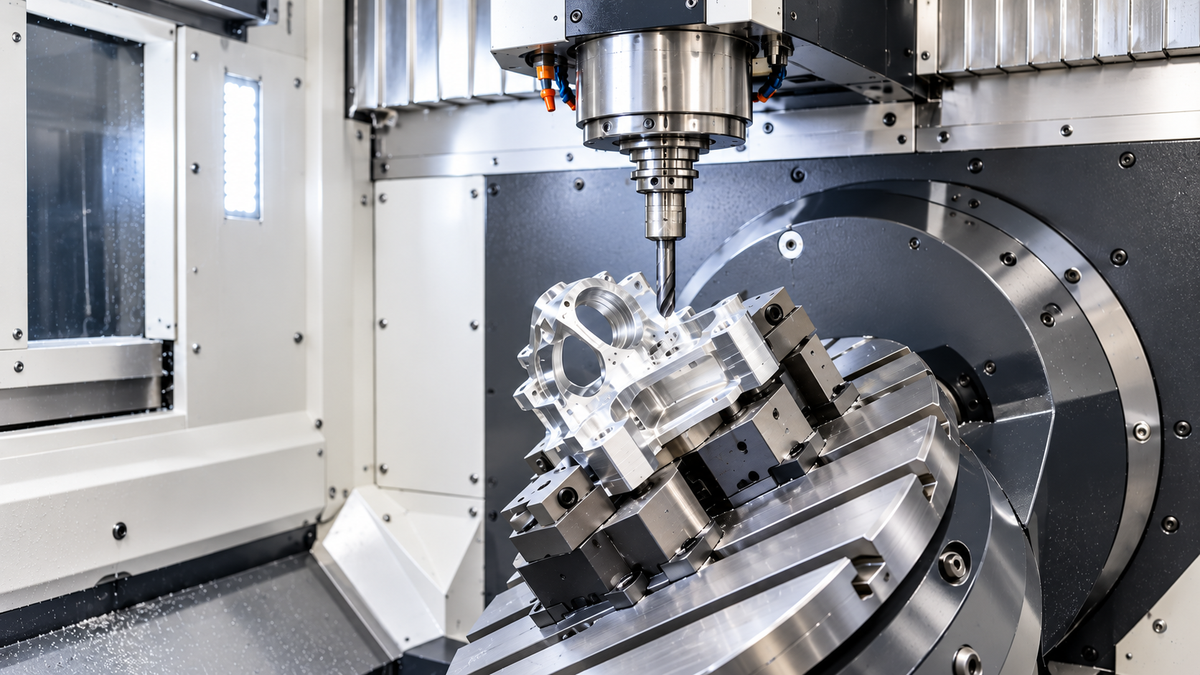
Manufacturing metal parts requires the right combination of materials, processes, and design. CNC machining, die casting, and metal injection molding (MIM) are common methods for producing custom metal components.
The best process depends on part geometry, tolerance, material, and production volume. Choosing the wrong method can increase costs, waste material, and cause quality problems.

Common Metal Parts Manufacturing Processes
Different manufacturing processes offer different advantages.
| Process | Best Applications | Main Advantage |
|---|---|---|
| CNC Machining | Precision parts, prototypes, complex features | High accuracy, no dedicated mold |
| Die Casting | Aluminum housings, structural components | Low unit cost at high volumes |
| Metal Injection Molding (MIM) | Small, complex stainless steel parts | Complex geometry, repeatability |
| Powder Metallurgy | Gears, bushings, simple structural parts | High material utilization |
| Sheet Metal Fabrication | Brackets, panels, enclosures | Efficient for thin-walled parts |
CNC Machining
CNC machining removes material from metal stock through milling, turning, drilling, or grinding.
It is suitable for precision metal parts manufacturing, especially when parts require tight tolerances or frequent design changes.
Common materials include aluminum 6061, stainless steel 304/316, titanium, and brass.
CNC machining can achieve ±0.01 mm tolerances on suitable features, although actual capability depends on geometry, material, and inspection conditions.
Die Casting
Die casting uses high pressure to inject molten metal into a steel mold.
It is widely used for aluminum and zinc components, including motor housings, electronic enclosures, and automotive parts.
The process offers high production efficiency but requires upfront tooling investment. Critical holes and mating surfaces often need secondary CNC machining.
Metal Injection Molding (MIM)
MIM combines fine metal powders with injection molding, followed by debinding and sintering.
It is ideal for manufacturing small metal parts with complex shapes, especially stainless steel components.
MIM reduces material waste and can lower unit costs at higher volumes. However, tooling costs, sintering shrinkage, and dimensional requirements must be considered.
Materials Used in Manufacturing Metal Parts
Material selection affects strength, corrosion resistance, machinability, and cost.
| Material | Common Grades | Applications |
|---|---|---|
| Aluminum | 6061, 7075, A380 | Housings, brackets, optical parts |
| Stainless Steel | 304, 316L, 17-4PH | Medical and industrial parts |
| Carbon/Alloy Steel | 1018, 4140 | Shafts, gears, mechanical parts |
| Titanium | Grade 2, Grade 5 | Medical, aerospace |
| Brass/Copper | C360, C110 | Connectors, electrical parts |
Not every alloy works with every process. For example, 6061 is commonly used in CNC machining, while A380 is designed for die casting.
What Affects Metal Parts Manufacturing Costs?
Four factors have the greatest impact on manufacturing cost.
1. Part complexity: Deep pockets, thin walls, and difficult-to-access features increase machining time and production risks.
2. Tolerances: Tight tolerances require additional process control and inspection. Specify them only for critical dimensions.

3. Production volume: CNC machining avoids expensive molds, while die casting and MIM can reduce unit costs when production quantities justify tooling.
4. Material and finishing: Expensive alloys, challenging materials, and additional surface treatments increase production costs.
For tooling-based processes, the cost per part also depends on how the initial tooling investment is distributed across production quantities.
How to Choose the Right Manufacturing Process
| Your Requirement | Recommended Process |
|---|---|
| Prototype or low-volume precision parts | CNC Machining |
| High-volume aluminum housings | Die Casting |
| Small, complex steel parts in volume | MIM |
| Simple gears or bushings in volume | Powder Metallurgy |
| Thin metal brackets or enclosures | Sheet Metal Fabrication |
A combination of processes may be more economical. For example, die casting can produce the main geometry, while CNC machining finishes critical bearing holes and assembly surfaces.
Before production, a DFM review should check wall thickness, machining access, dimensional tolerances, and potential deformation.
Custom Metal Parts Manufacturing at XY-GLOBAL
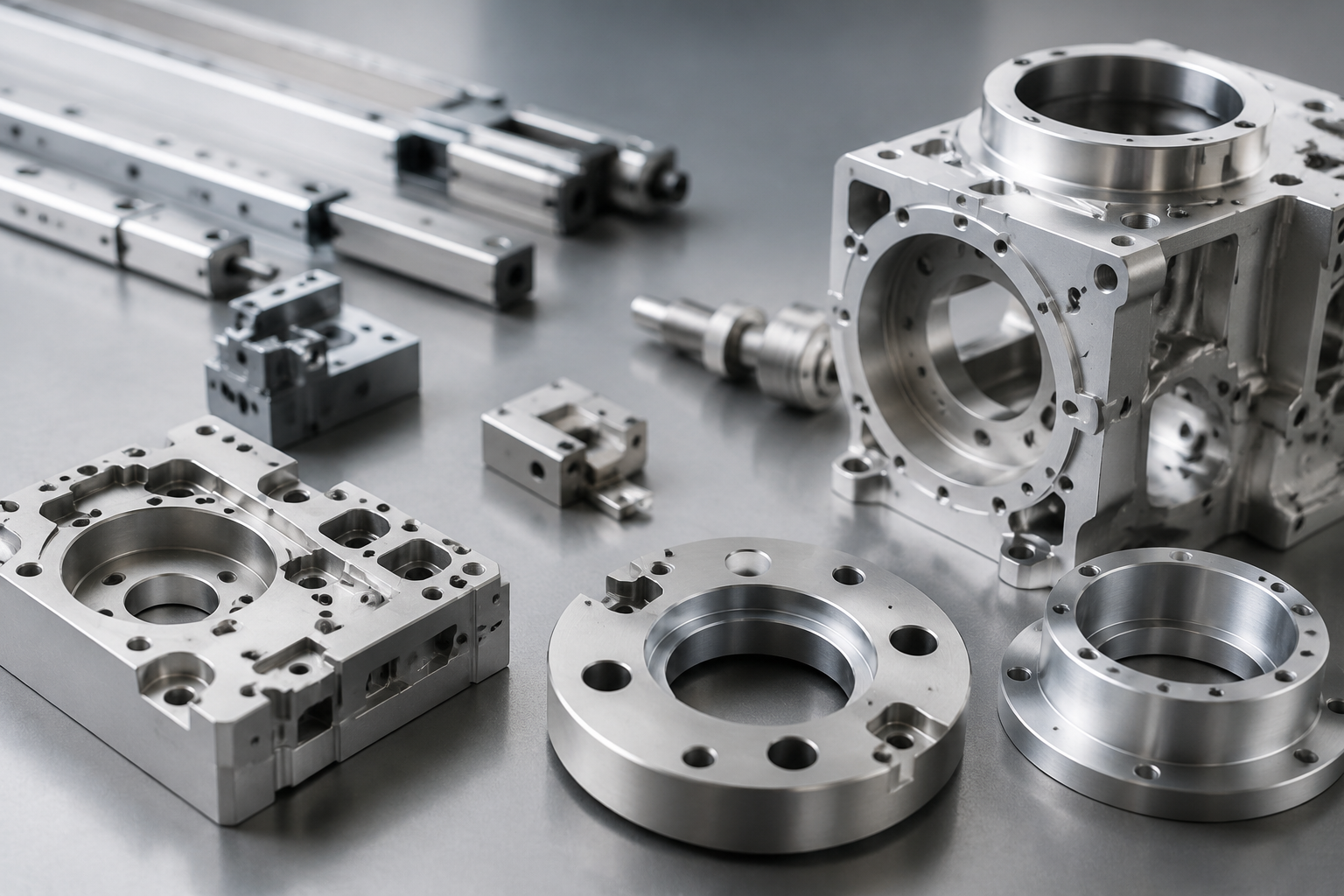
XY-GLOBAL provides custom metal parts manufacturing services, including CNC machining, die casting, MIM, and powder metallurgy.
We support aluminum, stainless steel, titanium, and other engineering materials for medical devices, optical equipment, robotics, and industrial applications.
Our engineering team can review your drawings, recommend suitable manufacturing processes, and identify opportunities to reduce production costs.
Send us your 2D drawings, 3D models, material requirements, and estimated quantities for a quotation.
FAQ
What is the best process for manufacturing metal parts?
CNC machining is suitable for precision parts and prototypes. Die casting and MIM are often more economical for specific high-volume applications.
What is the cheapest way to manufacture custom metal parts?
It depends on geometry and quantity. CNC machining avoids initial mold costs, while tooling-based processes can reduce unit costs at higher volumes.
Can small metal parts be manufactured with tight tolerances?
Yes. CNC machining supports tight tolerances on suitable features. MIM parts may need secondary machining when critical dimensions exceed molding and sintering capabilities.


공유하다:
CNC Machining in the Semiconductor Industry: Why Parts Can Fail Even When Dimensions Are Within Tolerance