


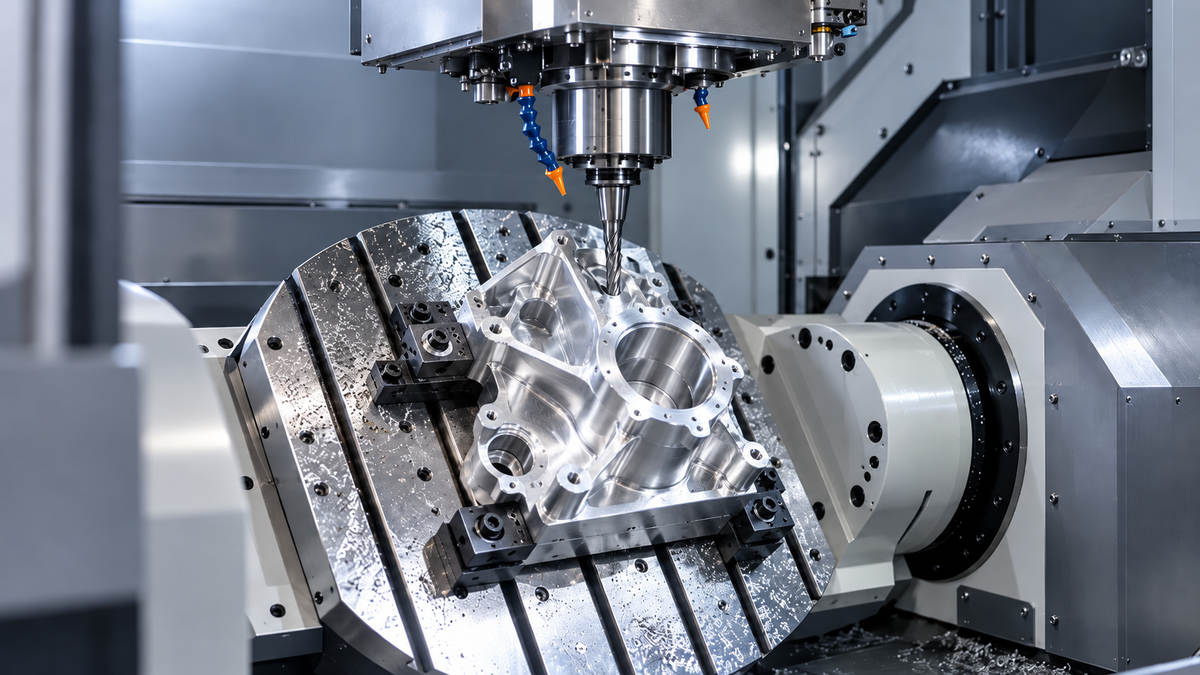
Precision 5 Axis CNC Machining Services
Specialize in 5‑axis CNC machining for complex, high‑precision parts used in medical, industrial applications, and more. With single‑setup multi‑face machining, tight tolerances, and fast turnaround, we help you turn challenging designs into accurate, ready‑to‑use components.
- 5/3+2 axis cnc machining
- Lead time as fast as 3 days
- Tolerances down to ±0.005 mm
- ISO 9001 & ISO 13485 certified

What Is 5‑Axis CNC Machining?
5‑axis CNC machining uses three linear axes (X, Y, Z) plus two rotating axes (A/B or B/C) to move the cutting tool or workpiece in multiple directions simultaneously. This allows the machine to reach complex angles and curved surfaces that are difficult or impossible to achieve on a 3‑axis machine.
With 5‑axis machining, complex parts can be produced in fewer setups, improving accuracy, reducing manual intervention, and shortening lead times. It is ideal for high‑precision applications where geometry, fitness for assembly, and surface finish are critical.
Precision 5‑Axis CNC Machining Capabilities at XY-GLOBAL
| Machining Capability | Simultaneous 5‑axis and 3+2 positioning |
| Precision tolerance | ±0.005 mm (custom tighter tolerances available) |
| Surface finish | Ra 0.8 μm or better (custom finish options) |
| Thin‑wall & lightweight parts | Custom toolpaths for thin‑wall and lightweight structures |
| Lead time | 3 days from start (custom timelines for urgent projects) |
| Work envelope & spindle | Custom work envelope and spindle specs per project |
| In‑process inspection | On‑machine probing and in‑process checks for dimensional control |
| Final inspection | CMM or 3D scanning for critical dimensions and surface confirmation |
| Materials support | Aluminum, stainless steel, titanium, tool steel, engineering plastics (custom materials on request) |
| DFM support | Free design‑for‑manufacturing feedback on 3D models |
| NDA & confidentiality | NDA and confidentiality agreements supported |
| Production scale | Prototypes to mass production (custom volumes on request) |
5-Axis CNC Machining Materials
At XY-GLOBAL, our 5‑axis CNC machining services support a wide range of materials commonly used in demanding industries. Trust our expertise to ensure your chosen material delivers optimal performance, cost-efficiency, and certified quality.
*For materials not listed here, please contact us directly.
Aluminum
Common Grades: 6061-T6, 6063, 6082-T6, 7075-T6, 2024, 5083
Characteristics: Lightweight, easy to machine, corrosion-resistant, and well suited for complex geometries and high-speed machining.
Stainless Steel
Common Grades: 303, 304, 316, 316L, 17-4PH, 420, 440C
Characteristics: High strength, excellent corrosion resistance, and suitable for medical, industrial, and precision mechanical components.
Carbon & Alloy Steel
Common Grades: 1018, 1045, 4130, 4140, 4340, 40Cr, 42CrMo4
Characteristics: High strength, toughness, and wear resistance for demanding structural and mechanical applications.
Tool Steel
Common Grades: D2, A2, O1, S7, M2
Characteristics: High hardness and wear resistance, often used for tooling, fixtures, and high-wear precision components.
Titanium
Common Grades: Grade 2, Grade 5 (Ti-6Al-4V)
Characteristics: High strength-to-weight ratio and excellent corrosion resistance. Common in aerospace, medical, and high-performance applications.
Copper
Common Grades: C101, C110, C145, C172
Characteristics: Excellent electrical and thermal conductivity, suitable for electrical, thermal management, and precision functional parts.
Brass & Bronze
Common Grades: C360, C260, CuZn39Pb3, C932, C954
Characteristics: Good machinability, corrosion resistance, wear resistance, and dimensional stability.
Engineering Plastics
- ABS
- POM/Delrin
- PCPMMA (Acrylic)
- PEEK
- PP Polypropylene
- PTFE (Teflon)
- Ultem (PEI)Nylon
Customize
Material options can be customized based on your part specifications and application requirements.
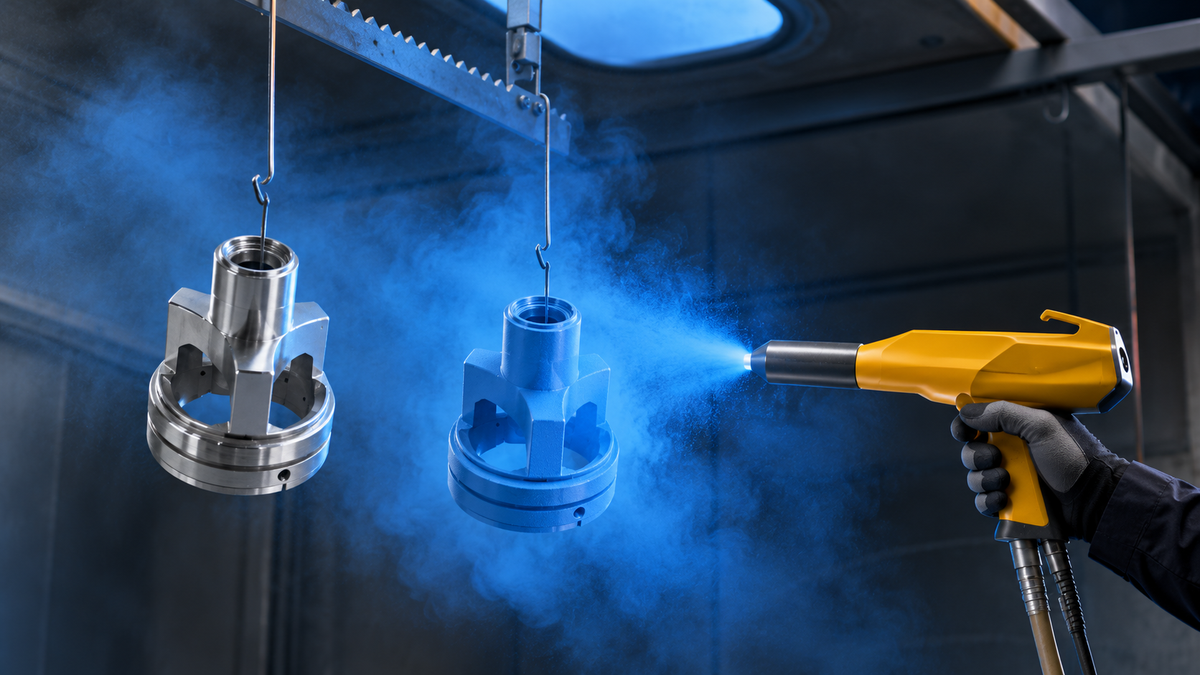
5-Axis CNC Machining Surface Finishes
Surface finishing is an important step in 5-axis CNC machining, especially for parts that require improved appearance, corrosion resistance, wear resistance, or specific functional properties. At XY-GLOBAL, custom surface finishes can be provided based on your material or other specific application requirements.
- As Machined: Keeps the original CNC cutting marks and is ideal for functional parts where appearance is not critical.
- Bead Blasting: Produces a consistent matte finish while reducing visible tool marks and minor surface imperfections.
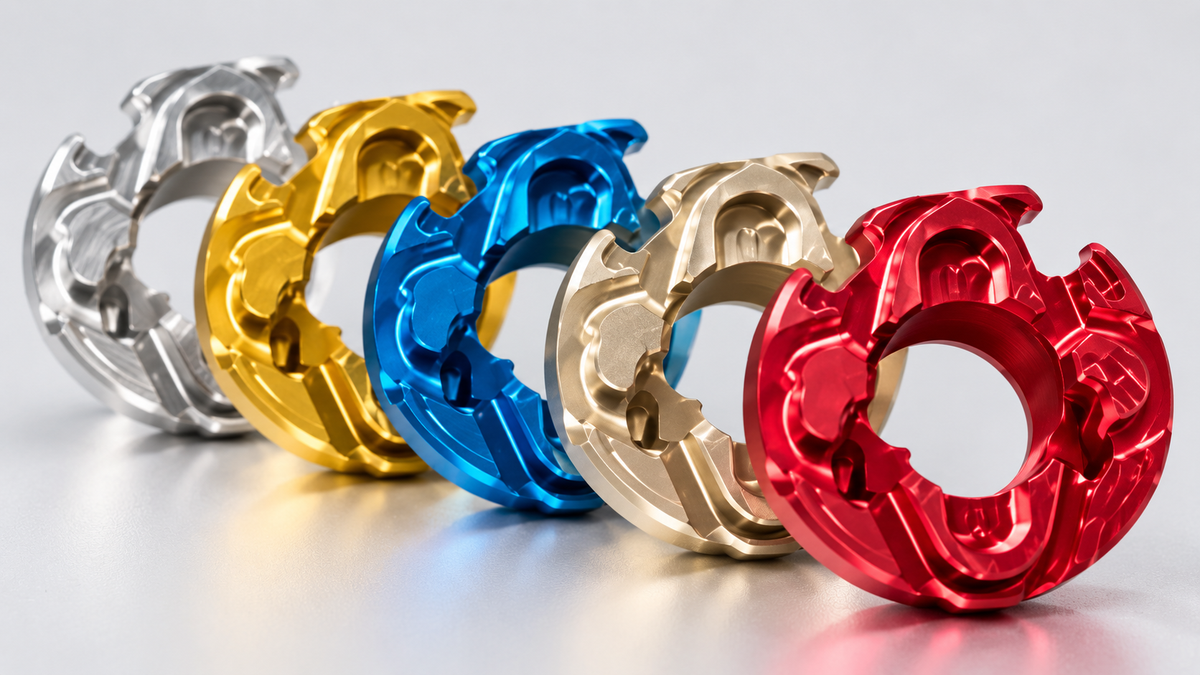
- Anodizing: Forms a protective oxide layer on aluminum to improve corrosion resistance, wear resistance, and appearance.
- Polishing: Removes machining marks and improves surface smoothness, appearance, and cleanliness.
- Passivation: Removes surface contaminants from stainless steel and enhances its natural corrosion resistance.
- Electropolishing: Smooths and brightens stainless steel surfaces while improving cleanliness and corrosion resistance.
- Electroless Nickel Plating: Deposits a uniform nickel layer with excellent corrosion and wear resistance, even on complex geometries.
- Powder Coating: Applies a durable protective coating with good corrosion resistance and a wide range of color options.

Typical Applications of 5‑Axis CNC Machining
- Aerospace: Structural components, turbine blades, engine housings, and support brackets
- Automotive: Lightweight structural parts, brackets, and complex housings
- Medical: Implants, surgical instruments, and highly precise components
- Mold & Die: Mold cavities, sliders, and insert components for complex molds
- Robotics & Automation: Joint housings, transmission parts, and custom enclosures

Simultaneous 5-Axis vs. 3+2 Indexed 5-Axis Machining
- Simultaneous 5‑Axis Machining
Simultaneous 5‑axis machining is the most advanced mode, where all five axes (X/Y/Z plus two rotary axes) move continuously and coordinately during cutting. The tool can constantly adjust its angle relative to the part, making it the only practical way to machine complex free‑form surfaces and streamlined geometries such as impellers and turbine blades. It delivers superior surface finish and the tightest tolerance control. - 3+2 Indexed Machining
It (also called 5‑axis positioning) is a positioning‑only mode. The two rotary axes (A/B or C) first fix the workpiece or tool in a specific orientation, and then the cutting is done using only the three linear axes (X/Y/Z). Although the axes do not move simultaneously, this method achieves a “done‑in‑one” result, reducing cumulative errors from multiple setups. It is ideal for drilling, face milling, and profiling across multiple faces.
3-axis vs. 5-axis CNC Machining
The primary difference between 3-axis and 5-axis CNC machining mainly lies in their production capacity and final precision.
3-axis machining operates solely along the three linear axes (X, Y, and Z). Its advantage lies in its high efficiency and lower cost for simple, flat parts, basic milling, and 2D features. Consequently, the 3-axis system is the primary choice for high-volume, foundational designs in sectors like automotive, construction, and certain aerospace components.
5-axis machining, conversely, adds two rotational axes, allowing the cutting tool or the workpiece to simultaneously cut from multiple angles. This capability makes 5-axis machines exceptionally proficient at manufacturing geometrically complex precision parts, such as impellers, turbine blades, or medical implants. While the initial investment for a 5-axis system is higher, it significantly boosts overall manufacturing efficiency and final accuracy by reducing setups and human error through its "Done-in-One" principle. Therefore, the 5-axis system is strongly preferred in sectors like aerospace, medical, and advanced automotive manufacturing, where extreme precision and tight tolerance requirements are paramount.
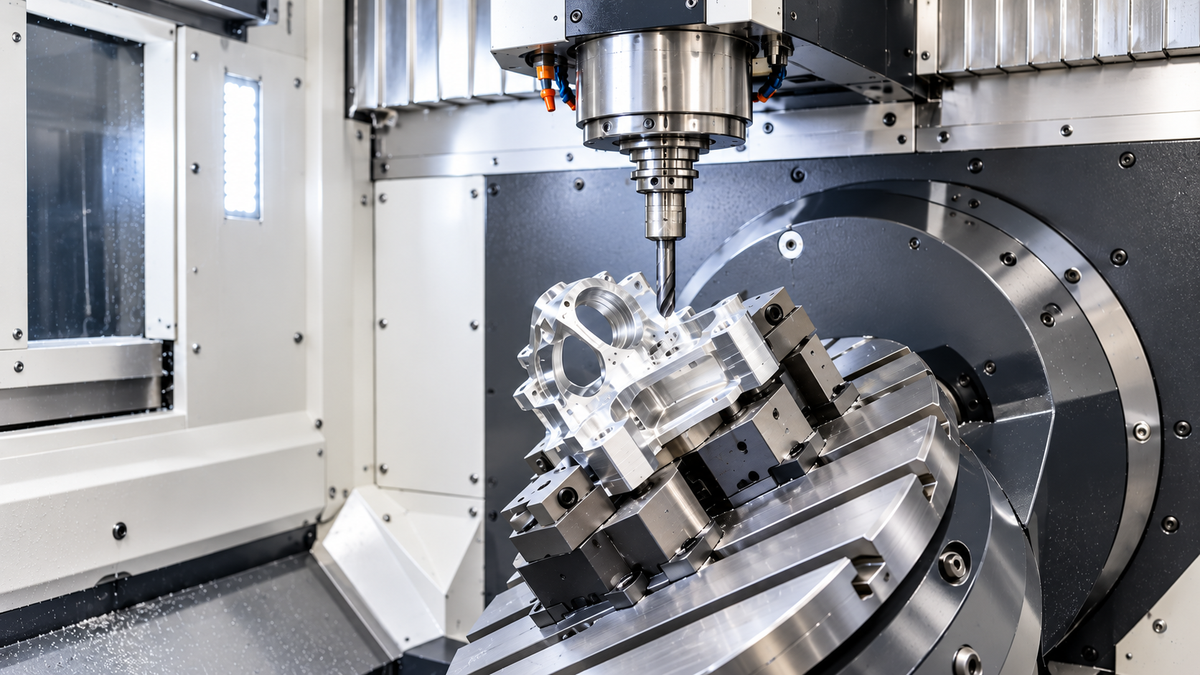
Why Choose Our 5‑Axis CNC Machining Services
At XY-GLOBAL, we provide 5-axis CNC machining for complex, high-precision parts with multi-angle features, curved surfaces, deep cavities, and demanding tolerances. By reducing setups and combining advanced machining with engineering and inspection support, we help improve accuracy, efficiency, and part consistency.
- Complex Geometry Capability: Machine multi-surface parts, angled features, deep cavities, and complex contours that are difficult to achieve with conventional 3-axis machining.
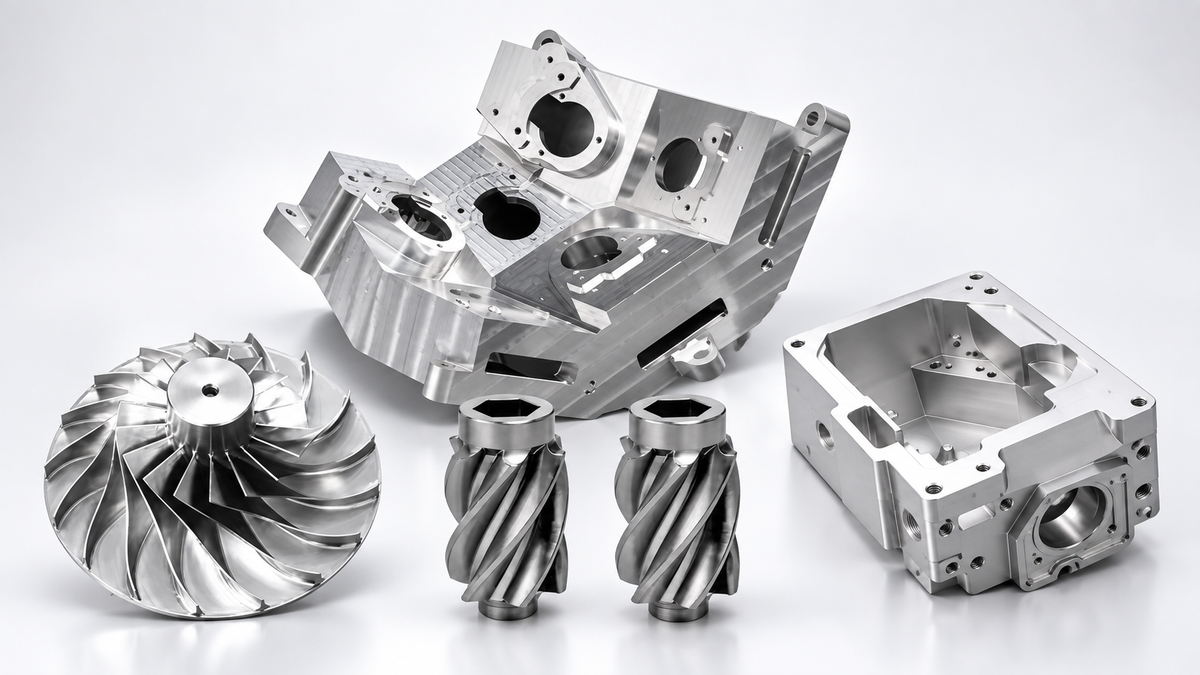
- Fewer Setups, Better Accuracy: Multi-face machining in fewer setups helps reduce repositioning errors, improve feature alignment, and achieve tolerances down to ±0.005 mm for selected critical features.
- Materials & Surface Finishes: A wide range of metals and engineering plastics can be machined, with customized finishing options available for functional and cosmetic requirements.
- Engineering & DFM Support: Practical DFM recommendations to improve manufacturability and reduce unnecessary machining complexity.
- Reliable Quality Control: ISO 9001 and ISO 13485 quality systems support consistent inspection of critical dimensions and GD&T features from prototypes through repeat production.
5-Axis CNC Machining FAQs
What is the difference between 3-axis and 5-axis machining?
3‑axis machining moves the tool in three linear directions (X/Y/Z), while 5‑axis adds two rotating axes, allowing access to complex angles and surfaces in fewer setups.
Do you use simultaneous 5‑axis or 3+2 indexing?
We support both simultaneous 5‑axis machining for complex surfaces and 3+2 indexing for multi‑face parts, depending on your design and production requirements.
Does 5-axis machining cost more than 3-axis?
The initial cost (equipment and programming) for 5-axis is higher. However, when considering the total cost of ownership (TCO) per part, 5-axis is often more economical for complex components. It saves costs by:
- Minimizing manual setups and labor time.
- Achieving a superior surface finish, reducing or eliminating secondary finishing operations.
- Using shorter, stiffer cutting tools, which improves tool life and material removal rates.
Is 5-axis machining always required for complex parts?
Not always, but it is the most efficient and precise method. While some complex parts can be made using multiple setups on a 3-axis machine, 5-axis machining achieves the part in a single setup ("Done-in-One"). This drastically reduces accumulated setup errors, improves part-to-part consistency, and saves significant time and labor, especially for components like impellers or orthopedic implants.
What is the tolerance of 5 axis CNC machining?
While the tolerance achieved in 5-axis CNC machining varies based on factors like machine quality, material, and environment, XY-GLOBAL is capable of achieving tolerances up to ±0.005 mm for your project.
What industries benefit most from 5-axis CNC Machining?
Industries requiring high geometric accuracy and surface quality on complex parts are the primary beneficiaries:
Aerospace: Turbine blades, impellers, structural components.
Medical & Dental: Custom implants, prosthetic joints, and surgical instruments.
Energy: Oil and gas drilling tools, nuclear components.
Mold & Die: Intricate mold cavities with deep or contoured features.