


Custom Precision CNC Milling Services
Specialize in pushing the technical boundaries of CNC milling. Able to handle designs requiring a minimum wall thickness of 0.5mm and utilizes fine tools down to a 0.5mm end mill size. Trust our expertise for your most intricate and demanding parts.
Online CNC Milling Service for Custom Machined Parts

3-Axis CNC Milling
Offers high cost-efficiency and speed for producing standard parts and simple geometric shapes.

4-Axis CNC Milling
Increases production efficiency and is ideal for parts requiring multiple side operations, significantly reducing manual setup time.

5-Axis CNC Milling
Capable of manufacturing complex, multi-sided parts, drastically minimizing clamping, which enhances both accuracy and surface finish.
CNC Milling Materials
At XY-GLOBAL, our CNC milling is capable of handling an extensive spectrum of materials across virtually every industrial category with ±0.01μm tolerance and Ra 0.8µm, from easily machinable aluminum and soft plastics to challenging aerospace-grade titanium and high-hardness tool steels.
For materials not listed here, please contact us directly.
Aluminum
Common Grades: 6061, 6063, 7075, 2024, 5083
Characteristics: Lightweight, easy to machine, and corrosion-resistant. Commonly used for mechanical parts, robotics, electronics, automotive components, and aerospace applications.
Stainless Steel
Common Grades: 304, 316, 316L, 17-4PH, 420, 440C
Characteristics: High strength and excellent corrosion resistance. Suitable for medical devices, food equipment, automation systems, and industrial components.
Carbon Steel & Alloy Steel
Common Grades: 1018, 1020, 1045, 4140, 42CrMo4, Tool Steels
Characteristics: Good strength, toughness, and wear resistance. Commonly used for structural parts, fixtures, mechanical components, and high-load applications.
Titanium
Common Grades: Grade 2, Grade 5 / Ti-6Al-4V
Characteristics: High strength-to-weight ratio and excellent corrosion resistance. Widely used in aerospace, medical, and high-performance industrial applications.
Copper
Common Grades: C101, C110, C145, C172
Characteristics: Excellent electrical and thermal conductivity. Suitable for electrical components, heat dissipation parts, and precision functional components.
Brass
Common Grades: C360, C260, CuZn39Pb3
Characteristics: Good machinability, corrosion resistance, and attractive appearance. Commonly used for connectors, valves, fittings, and precision mechanical parts.
Engineering Plastics
Common Grades / Materials: POM / Delrin, PEEK, PTFE, Nylon, PC, ABS, PMMA, UHMW-PE
Characteristics: Lightweight, electrically insulating, and resistant to chemicals. Suitable for functional components, insulating parts, and lightweight structural applications.
Specialty Alloys
Common Grades / Materials: Inconel 625, Inconel 718, Bronze, Magnesium Alloys, Nickel Alloys
Characteristics: Suitable for demanding applications requiring high temperature resistance, wear resistance, corrosion resistance, or specialized mechanical performance.
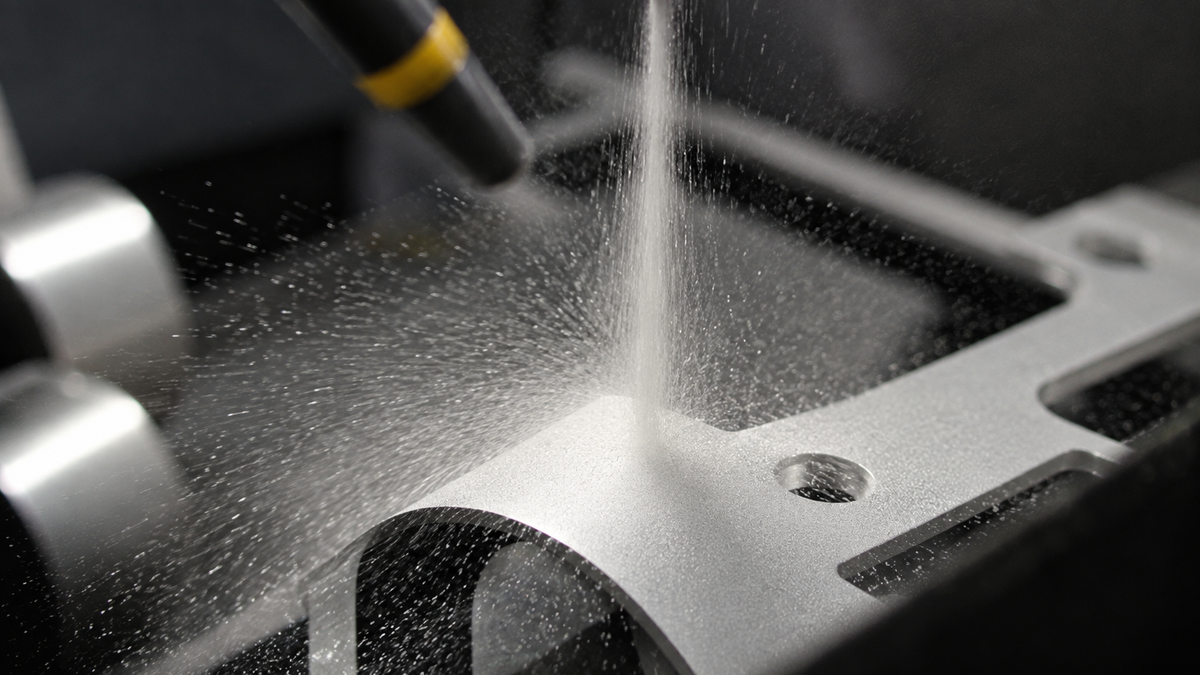
CNC Milling Surface Finishing Options
At XY-GLOBAL, we support a wide range of surface finishing options for CNC milled parts, from standard cosmetic finishes to functional coatings and protective treatments. Custom surface treatments are also available based on your material, drawing specifications, and application requirements.
- As-Machined: Keeps the original CNC machining marks with no additional finishing process.
- Bead Blasting: Produces a uniform matte or satin surface and helps remove minor machining marks.
- Anodizing: Commonly used for aluminum parts to improve corrosion resistance, surface hardness, and appearance.
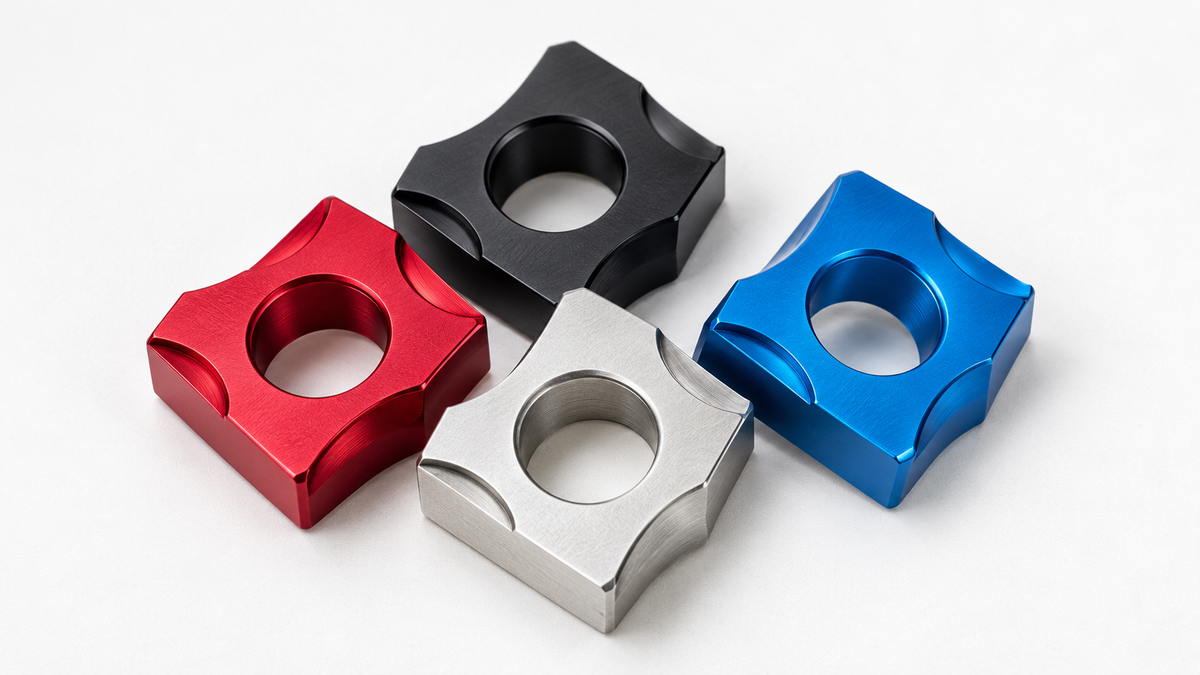
- Polishing: Improves surface smoothness and appearance, and can provide a brighter or mirror-like finish depending on requirements.
- Brushing: Creates a consistent linear texture, commonly used for decorative aluminum and stainless steel parts.
- Plating: Options such as nickel, chrome, zinc, or electroless nickel plating can improve corrosion resistance, wear resistance, conductivity, or appearance.
- Passivation: Commonly used for stainless steel parts to improve corrosion resistance without significantly changing dimensions.
- Powder Coating: Provides a durable protective coating with a wide range of color and texture options.
- Black Oxide: Mainly used for steel parts to provide a dark appearance and basic corrosion protection.
What is CNC Milling & CNC Milling at XY-Global
CNC Milling is a high-precision, subtractive manufacturing process that utilizes computerized controls to shape solid material into complex three-dimensional parts. It is highly versatile, capable of creating flat surfaces, slots, holes, and intricate contours in virtually any material, making it ideal for prototypes and high-volume component production.
At XY-Global, we specialize in custom 3-axis, 4-axis, and 5-axis milling services, using high-end equipment like Haas and DMG MORI machines for exceptional precision and reliability. Combined with our expert machinists and rigorous quality control (QC) standards, we ensure high component quality and tight tolerances for every project—from rapid prototyping to end-use components.

How Does CNC Milling Work
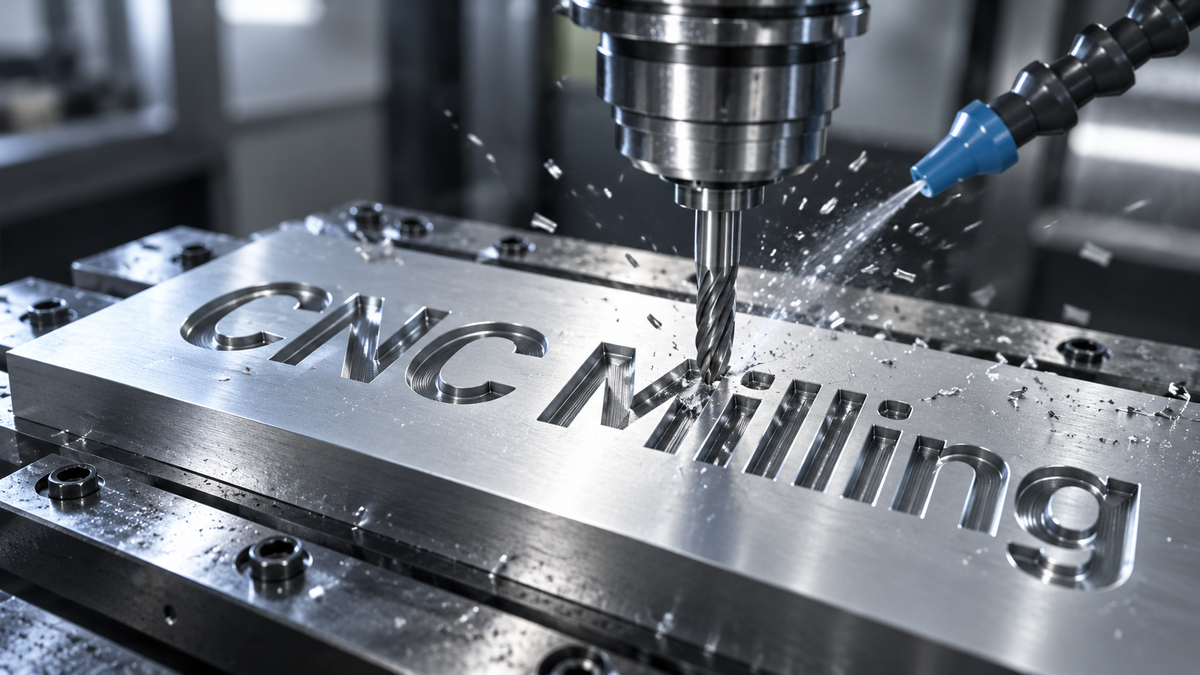
CNC Milling is a highly precise subtractive manufacturing process that uses G-code and Computer Numerical Control to guide a rapidly rotating cutting tool to remove material from a stationary workpiece across multiple axes (X, Y, Z), producing complex 3D components with high accuracy.
The core principle of CNC milling involves the rotation of a multi-point cutting tool (such as an end mill) at high speeds, which provides the main cutting action. Unlike CNC turning where the workpiece rotates, here the workpiece is held stationary in a fixture or vise on the machine's table. The CNC controller guides the tool's precise movement along the X, Y, and Z axes to remove material, creating complex geometries and non-symmetrical parts essential for rapid prototyping and manufacturing across metals and plastics.

Why Choose XY-GLOBAL for CNC Milling Services
- High Precision: Tolerances down to ±0.005 mm for selected critical features, with reliable machining and inspection for consistent dimensions.
- 3-Axis To 5-Axis Milling: Flexible multi-axis machining for a wide range of geometries, complexity levels, and tolerance requirements, from simple milled components to complex multi-surface parts.
- Flexible Materials & Finishing Options: Choose from a wide range of metals and engineering plastics, with customized surface finishing options from anodizing to powder coating.
- Engineering Support: Engineering review of drawings and CAD files before machining, with practical DFM feedback to improve manufacturability, reduce unnecessary machining steps, and control cost.
- Reliable Quality Control: ISO 9001 and ISO 13485 quality systems, supported by CMM and precision inspection for critical dimensions and GD&T requirements.
CNC Milling FAQs
What is the difference between CNC Turning and CNC Milling?
The key difference lies in the motion: CNC Turning involves the material (workpiece) rotating rapidly against the tool, making it highly efficient for circular parts. Conversely, CNC Milling involves the tool (cutter) rotating, which is better suited for producing complex, non-symmetric, prismatic shapes.
What are your guaranteed precision limits? What tolerances can you achieve on 5-Axis projects?
Our standard general tolerance is ±0.1mm, but with our 5-Axis capabilities, we routinely achieve tight tolerances down to ±0.025mm for critical features and materials.
What is the difference between 3-axis, 4-axis, and 5-axis machining?
The number of axes determines the degrees of freedom for the relative motion between the tool and the workpiece: 3-axis is the most basic, suitable for simple, flat parts; 4-axis adds one rotary axis, suitable for cylindrical parts or features around an axis; 5-axis has three linear axes and two rotary axes, allowing processing from more angles, completing complex geometries in a single setup, and achieving higher precision.
How do you ensure consistent quality across large production runs?
We adhere to ISO 9001 standards and employ advanced quality control, including Coordinate Measuring Machine (CMM) inspection and rigorous statistical process control (SPC), guaranteeing uniformity in every batch.
What are the main applications of CNC Milling?
CNC Milling span various high-tech industries, including rapid prototyping, the production of complex structural and engine components for aerospace and automotive sectors, the manufacturing of precision medical devices and implants, and the creation of intricate electronics enclosures and tooling/molds due to its ability to consistently produce complex, high-accuracy parts.